GEM HUNTING
The World of Gem Hunting
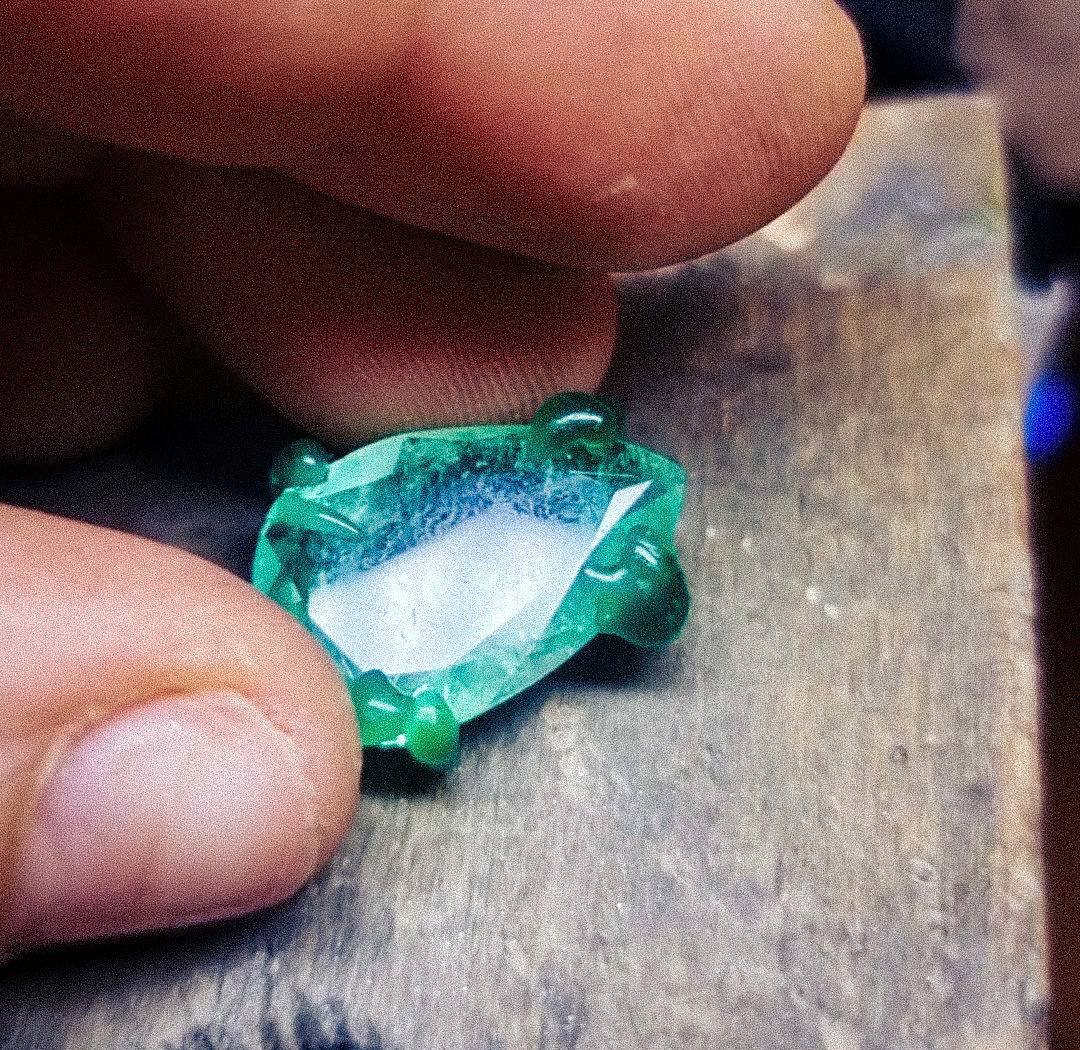
Because every stone tells a story, mastery of stones is at the heart of Laure Victoria Gaury’s expertise. We will assist you in your search for the perfect gemstone, one that will embody your vision and give your piece its unique character.
Traditionally, jewellery has separated gemstones into two families. The precious stones are four: diamond, sapphire, emerald, and ruby. All others, from aquamarine to tourmaline, spinel or garnet, were called fine stones, or, less elegantly, “semi-precious”. Today, many gemmologists and jewellers prefer to speak simply of gemstones. The old hierarchy says little about the true value of a stone; what matters is the stone itself.
Beyond classic gems, we favour rare, atypical stones with unique nuances: milky spinel, two-tone sapphires, coloured diamonds. Each stone is selected for its light, character and emotional resonance.
Our natural gems meet the highest standards:
– Coloured stones carefully chosen for their intensity and purity.
– Diamonds certified by independent laboratories (GIA or HRD) from 0.3 ct upwards, with a minimum of G colour and VS clarity (or H colour and SI clarity), and coloured diamonds selected for their unique shades.
We also work with partners who can supply stones sourced from responsible and RJC-certified channels, combining beauty with ethics.
Sapphires, far beyond blue
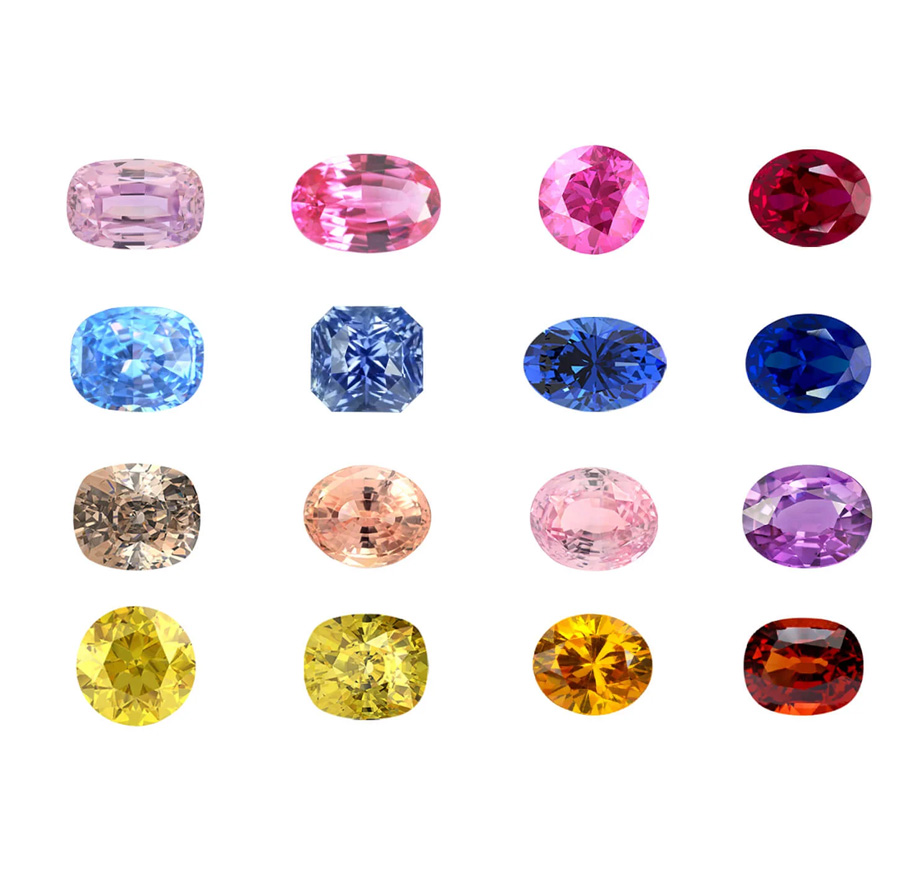
Sapphire belongs to the corundum family, a crystallised form of aluminium oxide. Strictly speaking, the name designates its blue variety; red corundum is called ruby. In the jewellery trade, however, the word sapphire is used for corundum of almost every other colour: pink, yellow, violet, green, orange, and even colourless.
With a hardness of 9 on the Mohs scale, sapphire is the hardest natural gemstone after diamond. It resists scratches and everyday wear, making it an ideal choice for rings and pieces meant to be worn for a lifetime and passed on.
Known since Antiquity, sapphire takes its name from the Latin sapphirus and the Greek sappheiros, words that once referred to blue stones. For centuries, it has been associated with wisdom, loyalty and the sky.
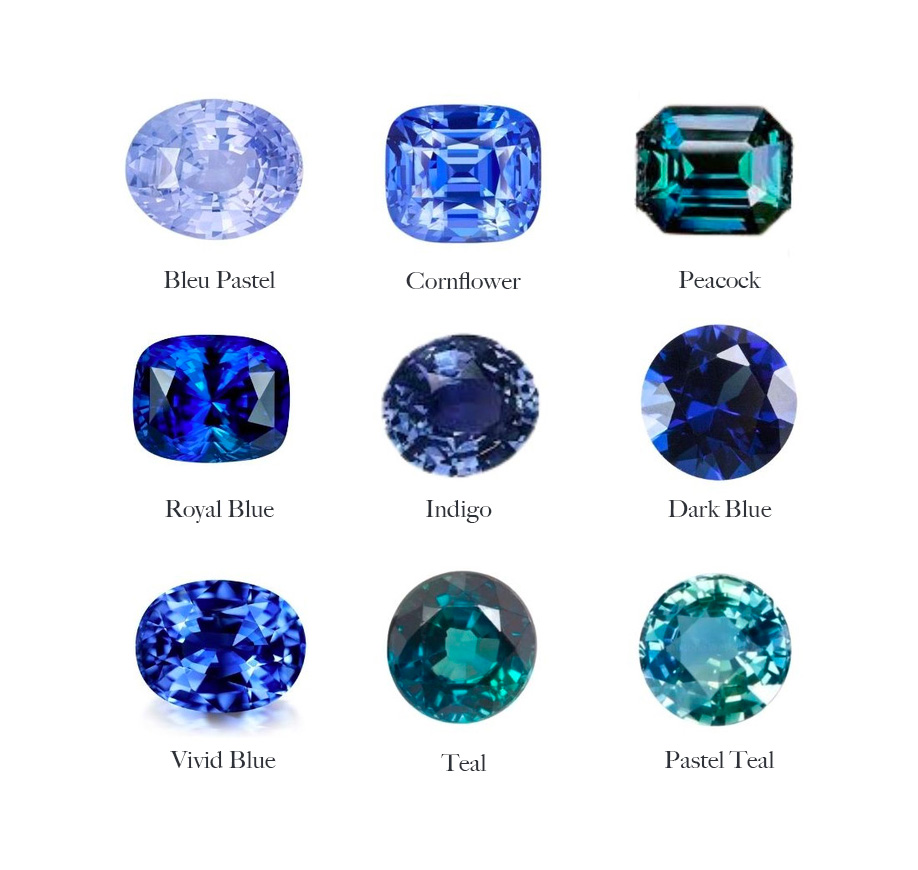
Blue remains its most celebrated colour, and some shades are especially prized:
– Royal blue, a deep, intense and highly saturated blue, rare and much sought after.
– Cornflower blue, a soft, velvety blue named after the flower.
– Midnight blue, dark and mysterious, almost ink-like.
Among all sapphires, only one has been given its own name. Padparadscha, from the Sinhalese word for the lotus blossom, describes a sapphire of a delicate pinkish-orange to orangy-pink hue, with light to moderate saturation. Its most coveted shade evokes a tropical sunset, a subtle balance where neither pink nor orange dominates. It is one of the rarest colours a sapphire can display.
Some sapphires reveal two or three colours within a single crystal, often blue, green and yellow. Each one is unique, and they are among our favourite stones to work with.
Most sapphires on the market are heated to enhance their colour, a long-accepted practice. Unheated sapphires are much rarer and more valuable. We always disclose any treatment, but we privilege the sourcing of unheated stones.
The emerald, the green variety of beryl, is almost never flawless. Its inclusions, known as the jardin (garden), are present even in the finest stones. They are its signature, not a defect, as long as they let the light flow through.
For centuries, emeralds have been immersed in natural oil, such as cedar oil, to soften the visibility of their fine fissures. This long-accepted enhancement must always be disclosed, and its degree, minor, moderate or significant, influences the value of the stone. Emeralds with no oil at all are exceptionally rare.
Synthetic resins, especially coloured ones, are another matter: they mask inclusions and alter the colour, and greatly reduce the value of the stone. This is why every emerald should come with a report from an independent gemmological laboratory stating the nature and degree of any treatment.
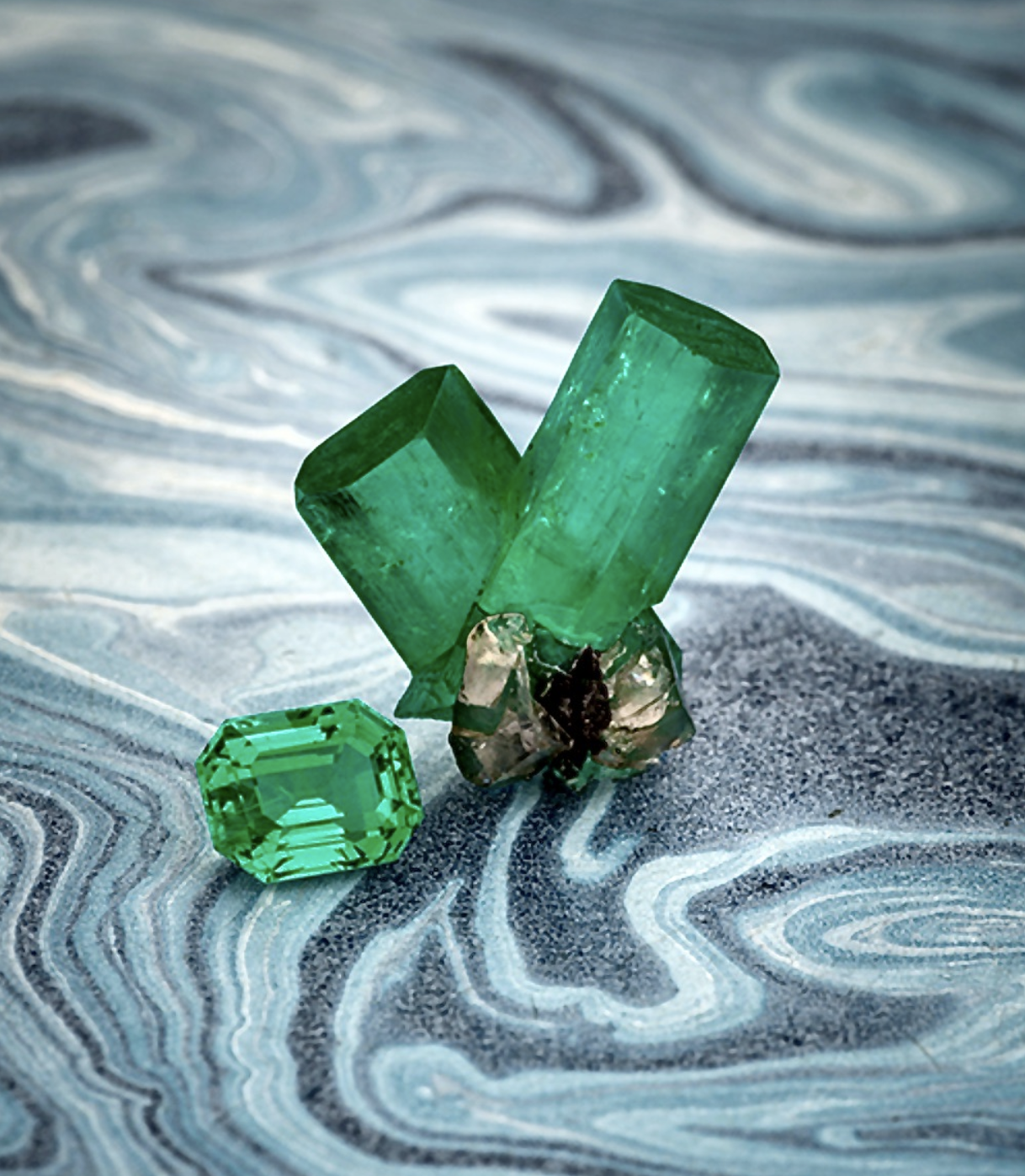
Emerald gardens of green
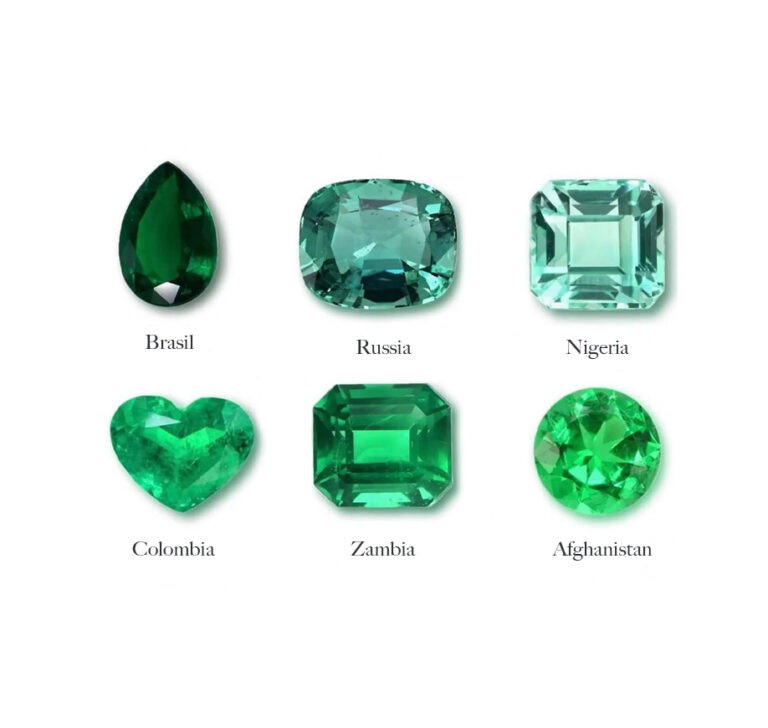
Unlike diamonds, emeralds have no international clarity scale. Favour a clear stone with light and life, rather than the darkest green: a lighter but purer emerald will often shine with more brilliance. For the colour, let your eye decide.
With a hardness of 7.5 to 8 on the Mohs scale and its natural inclusions, the emerald is more delicate than ruby or sapphire. The emerald cut, with its cut corners, was designed precisely to protect it.
Rubies, the colour for passion
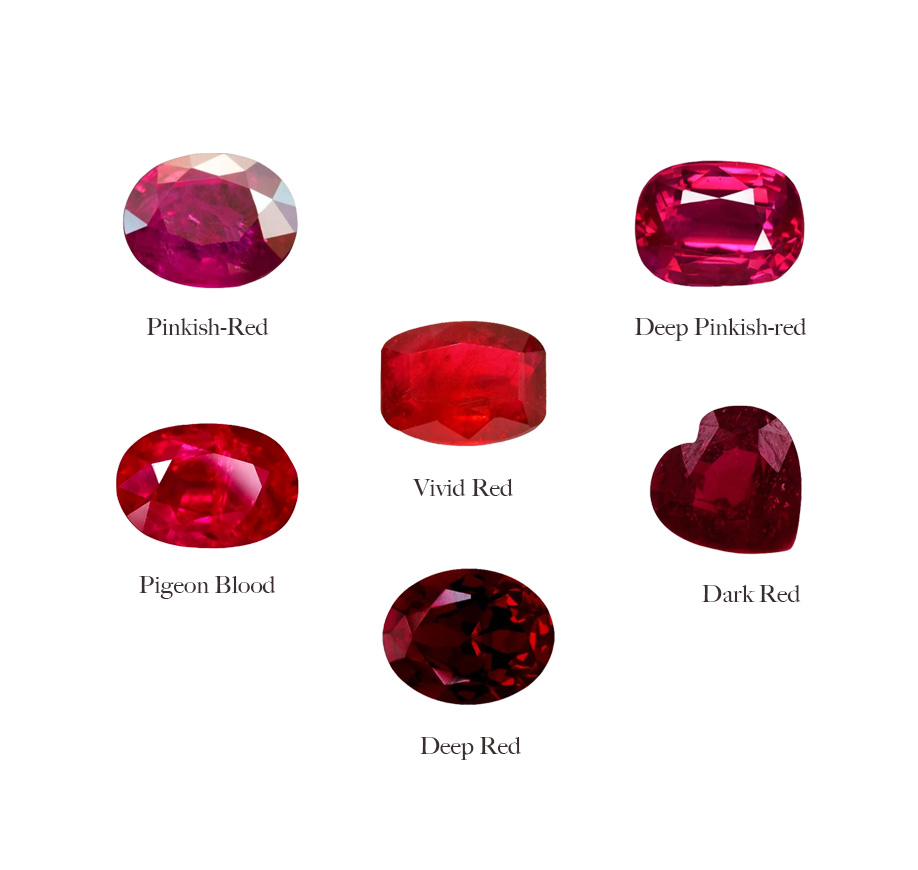
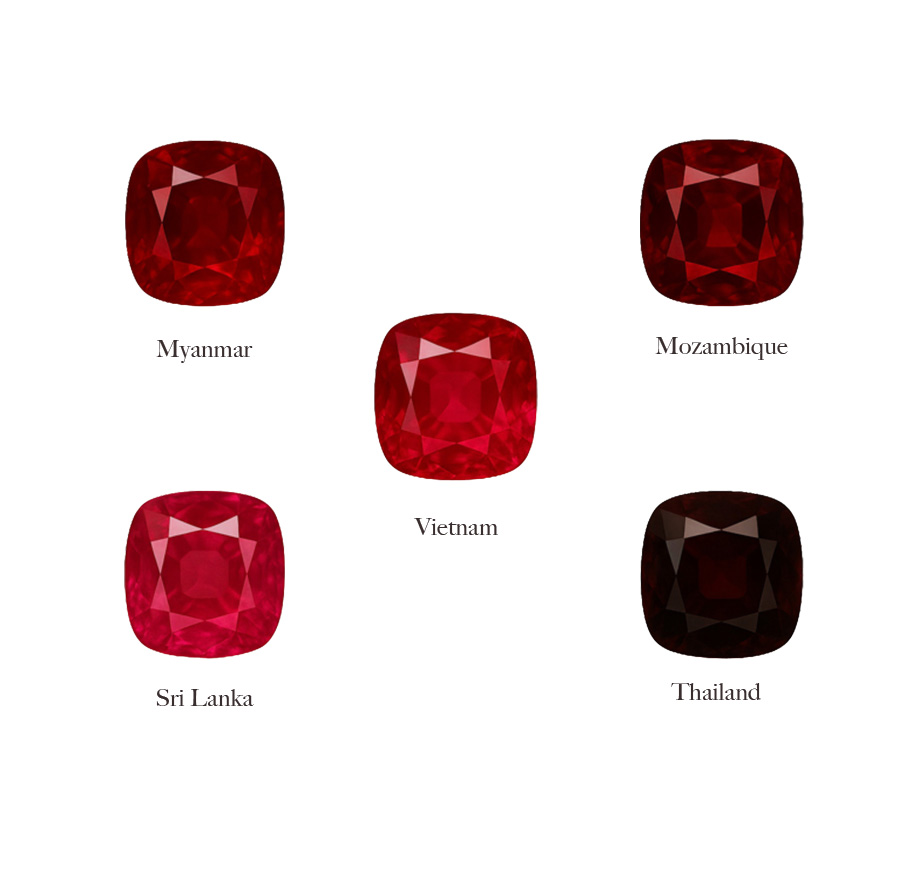
Ruby is the red variety of corundum, the same mineral as sapphire. Its colour comes from traces of chromium, which also make many rubies glow under ultraviolet light, giving them an inner fire even in daylight. In Sanskrit, it was called ratnaraj, the king of precious stones.
From vivid red to deep red, sometimes with a purplish or slightly orange tint. The most coveted shade, a pure and intense red with a hint of blue, is known as pigeon’s blood. When the colour becomes too light, the stone is no longer called a ruby but a pink sapphire.
With a hardness of 9 on the Mohs scale, second only to diamond, ruby resists scratches and everyday wear. Like sapphire, it is ideal for rings and pieces meant to be worn every day and passed on.
Most rubies on the market are heated to improve their colour and clarity, a long-accepted practice that must be disclosed. Unheated rubies are rare and far more valuable. Other treatments, such as filling fractures with lead glass, greatly reduce a stone’s value and durability. Synthetic rubies, made in laboratories since the early 20th century, are chemically identical to natural ones and can only be identified by a gemmological laboratory.
This is why every ruby we select comes with a report from an independent laboratory stating its origin and any treatment.
Choosing a stone with us means entering into a subtle dialogue between aesthetics, symbolism and identity, giving rise to a truly exceptional piece.